
The biggest jump-scare the movie business has experienced in 2025? The return of horror as a leading genre at the UK film market.
As a category, it has impressively outperformed previous years with a 22% year-on-year increase for the UK and Ireland film earnings: £83.7 million in 2025, compared with £68,612,395 in 2024.
“Last year, no horror film reached £10m at the UK or Irish box office. This year, five films have,” notes a box office editor.
The big hits of the year – a recent horror title (£11.4 million), another hit film (£16.2m), The Conjuring Last Rites (£14.98 million) and 28 Years Later (£15.54m) – have all remained in the theaters and in the public consciousness.
Even though much of the industry commentary focuses on the standout quality of renowned filmmakers, their triumphs suggest something evolving between audiences and the genre.
“I’ve heard people say, ‘Even if you don’t like horror this is a film you need to see,’” says a content buying lead.
“These productions twist traditional elements to craft unique experiences, resonating deeply with modern audiences.”
But beyond creative value, the consistent popularity of spooky films this year implies they are giving cinemagoers something that’s greatly desired: catharsis.
“These days, movies echo the prevalent emotions of rage, anxiety, and polarization,” observes a film commentator.
“Horror films are great at playing into people’s anxieties, while at the same time exaggerating them. So you forget about your day-to-day anxieties and focus on the monster on the screen,” explains a prominent scholar of horror film history.
Against a real-world news cycle featuring conflict, immigration issues, political shifts, and climate concerns, witches, zombies and vengeful spirits resonate a bit differently with filmg oers.
“Some research suggests vampire film popularity correlates with financial downturns,” comments an actress from a popular scary movie.
“This symbolizes the way modern economies can exhaust human spirit.”
Historically, public discord has always impacted scary movies.
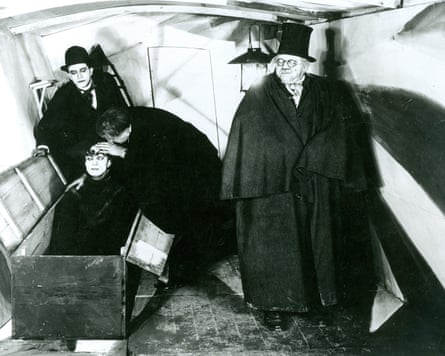
Analysts reference the rise of European artistic movements after the the Great War and the unstable environment of the post-war Germany, with movies such as The Cabinet of Dr Caligari and the iconic vampire tale.
Later occurred the economic crisis of the 30s and Universal Studios’ Frankenstein and The Wolfman.
“Take Dracula: it depicts an Eastern European figure invading Britain, spreading a metaphorical infection that endangers local protagonists,” explains a academic.
“Therefore, it embodies concerns related to foreign influx.”
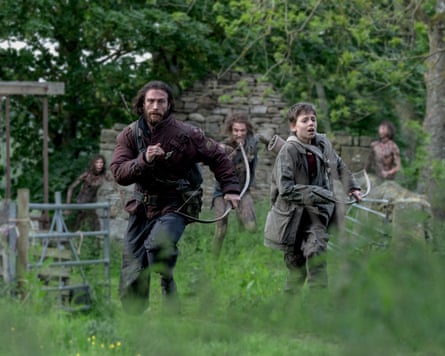
The boogeyman of migration shaped the newly launched rural fright a recent film title.
The creator elaborates: “I wanted to explore ideas around the rise of populism. Firstly, slogans like ‘Let’s Make Britain Great Again’, that harken back to some fantasy time when things were ‘better’, but only if you were a rich white man.”
“Secondly, the idea that you could be with someone you know and then suddenly they blurt out something round the dinner table or in a Facebook post and you’re like, ‘Where did that come from?’”
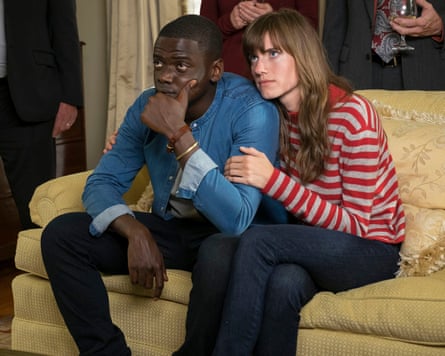
Arguably, the present time of acclaimed, socially switched-on horror started with a clever critique launched a year after a contentious political era.
It ushered in a recent surge of visionary directors, including a range of talented artists.
“Those years were remarkably vibrant,” comments a director whose movie about a murderous foetus was one of the time's landmark films.
“I believe it initiated a trend toward eccentric, high-concept horror that aimed for artistic recognition.”
This creator, now penning a fresh horror script, notes: “During the past decade, viewers have become more receptive to such innovative approaches.”
Simultaneously, there has been a reappraisal of the underrated horror works.
Earlier this year, a new cinema opened in a major city, showing underground films such as a quirky horror title, a classic adaptation and the modern reinterpretation of Dr Caligari.
The re-appreciation of this “rough and rowdy” genre is, according to the venue creator, a clear response to the calculated releases pumped out at the cinemas.
“It counters the polished content from big producers. The industry has become blander and more foreseeable. Numerous blockbusters share the same traits,” he says.
“In contrast [these alternative films] are a bit broken. It’s like they’ve erupted out of someone’s subconscious and been planted out there without corporate interference.”
Horror films continue to disrupt conventions.
“They have this strange ability to seem old fashioned and up to the minute, both at the same time,” says an specialist.
In addition to the revival of the deranged genius archetype – with several renditions of a classic novel on the horizon – he forecasts we will see fright features in the near future addressing our current anxieties: about tech supremacy in the near future and “supernatural elements in political spheres”.
Meanwhile, a religious-themed scare film The Carpenter’s Son – which tells the story of holy family challenges after the nativity, and features well-known actors as the divine couple – is set for release later this year, and will undoubtedly create waves through the faith-based groups in the America.</


